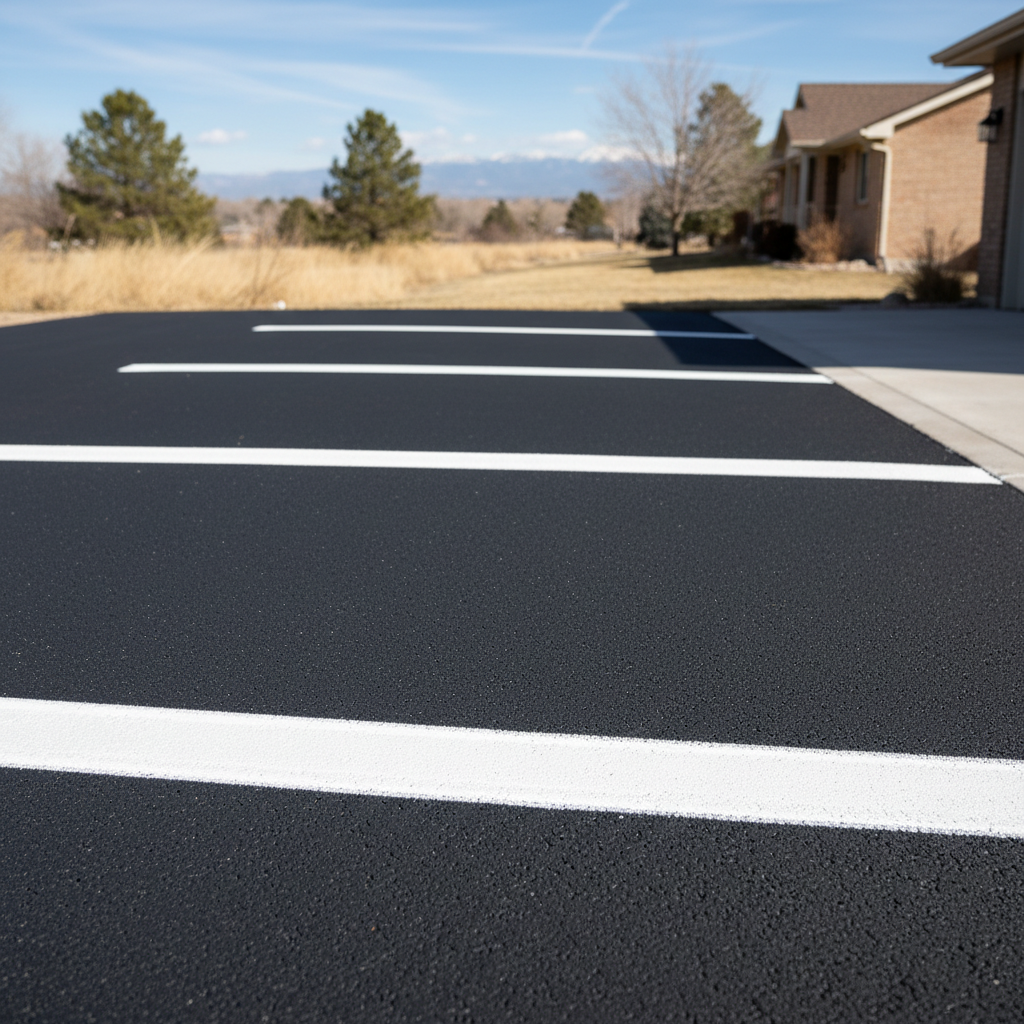
Do I really need striping if it's just my driveway or a small lot?
That's a question I get a lot, especially from folks with a bigger residential property or a small business lot. And the short answer is, it depends on what you're trying to achieve. If it's just your personal driveway, no, you probably don't need striping for practical reasons, unless you're trying to mark out specific parking spots for guests or something. But for a shared driveway, a small HOA, or any commercial property, even a small one, absolutely. Clear, well-maintained striping isn't just about looking good; it's about safety and efficiency. It guides traffic, designates parking, marks fire lanes, and makes sure everyone knows where they're supposed to be. Without it, you get confusion, blocked entrances, and potential accidents. So, while it might seem like an extra step, it's often a necessary one for smooth operation.
How long does asphalt striping actually last in Thornton?
This is a big one, because nobody wants to pay for something that's just going to disappear in a year. How long striping lasts really comes down to a few things: the quality of the paint, the preparation of the surface, and the amount of traffic it sees. Here in Thornton, our weather can be tough on everything. We get those intense summer suns that bake the asphalt and the paint, and then the freeze-thaw cycles in winter can really do a number on things. If you've got a lot that gets heavy vehicle traffic every day, like a busy apartment complex or a commercial center, you're going to see wear faster than a residential driveway that only gets a few cars a day. Generally, with good quality traffic paint and proper application, you can expect striping to hold up well for 1 to 3 years. Some paints might push it to 4, but that's usually under ideal conditions. When I do a job, I make sure the surface is clean and dry, and I use durable, high-quality traffic paint designed for our climate. That's how we get the best life out of it at Thornton Paving Co.
What kind of paint do you use for striping? Is it all the same?
No, it's definitely not all the same, and that's a crucial point. There are different types of traffic paints out there, and choosing the right one makes a huge difference in durability and visibility. For most asphalt striping jobs, especially for parking lots and driveways, we're typically using specialized traffic paints. These aren't your average house paints. They're formulated to be extremely durable, resistant to abrasion from vehicle tires, and able to withstand UV radiation from the sun and our harsh Colorado weather. Some common types include water-based acrylics, which are great for quick drying and environmental friendliness, and solvent-based paints, which often offer superior durability but take longer to cure. We also consider things like reflectivity. For areas where visibility at night is critical, like fire lanes or handicap spots, we might incorporate reflective beads into the paint or apply them over the wet paint. It's about matching the right product to the specific needs of your property, ensuring it holds up and does its job effectively.
Can you stripe over old, faded lines, or do they need to be removed first?
Good question, and it's something we assess on every job. In many cases, if the old lines are just faded but still somewhat visible, we can stripe right over them. This is often the most cost-effective approach. We'll clean the surface thoroughly to ensure good adhesion, and then apply fresh paint directly on top of the old markings. However, there are situations where simply striping over isn't the best solution. If the old lines are significantly misplaced, or if there are multiple layers of old, uneven paint that create a bumpy surface, then removal might be necessary. Sometimes, if the old paint is peeling or flaking badly, we'll need to scrape or grind it off first to create a smooth, clean surface for the new paint to stick to. We want your new lines to look sharp and last, so sometimes a little extra prep work is worth it. It all depends on the condition of the existing pavement and markings.
How long does it take for the paint to dry, and can I drive on it right away?
This is probably the most common question I get, because nobody wants their parking lot or driveway out of commission for too long. The drying time for traffic paint can vary, but generally, most modern traffic paints are designed for quick drying. A lot of the water-based acrylics we use are 'no-track' dry in about 10-30 minutes, meaning you can drive over them without picking up paint on your tires. However, 'no-track' doesn't mean fully cured. Full cure, where the paint has reached its maximum hardness and durability, can take longer, sometimes 24 hours or even a few days, depending on temperature and humidity. Here in Thornton, with our dry climate, things tend to dry pretty fast, which is a plus. But I always recommend giving it as much time as possible before heavy traffic, especially if it's a new sealcoat job too. We'll always give you a clear timeline for when you can safely resume normal use, usually within a few hours for light traffic.
What's the deal with ADA compliance for parking lot striping?
ADA compliance isn't just a suggestion; it's the law, and it's something every business owner or HOA in Thornton needs to take seriously. The Americans with Disabilities Act (ADA) sets specific standards for accessible parking spaces, and if your lot isn't compliant, you could face hefty fines. It's not just about painting a blue wheelchair symbol. There are very precise requirements for the number of accessible spaces based on the total number of spaces in your lot, the size of the spaces, the width of access aisles, the signage, and even the slope of the pavement. For example, a single accessible space needs an 8-foot wide parking space and a 5-foot wide access aisle right next to it. Van-accessible spaces are even wider. You also need proper signage, often with the International Symbol of Accessibility and sometimes a