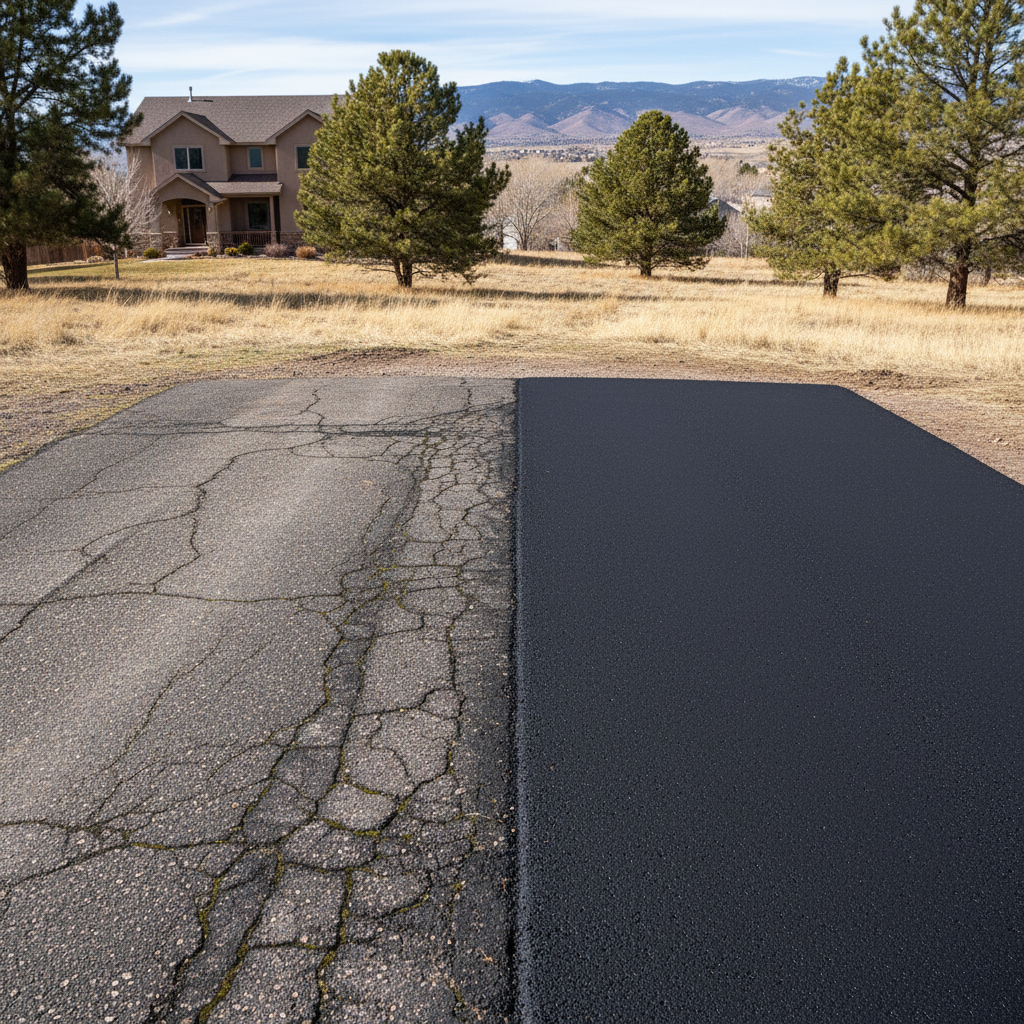
So, you've got cracks, potholes, or just some worn-out spots on your asphalt driveway. It happens, especially with our crazy freeze-thaw cycles here in Thornton. When it's time to fix it, you're generally looking at two main ways to patch that asphalt: infrared patching or the good old saw-cut and remove method. People ask me all the time which one's better, so let's break it down.
Infrared Asphalt Patching: Quick Fix or Lasting Repair?
Infrared patching is pretty neat technology. What we do is use a special infrared heater to warm up the existing asphalt around the damaged area. We get it hot enough that it becomes pliable again, almost like it was when it was first laid. Then, we rake out the old, loose stuff, add some fresh asphalt mix, and compact it all together. The idea is that you're essentially 're-welding' the new material to the old, creating a seamless patch.
The Good Stuff About Infrared:
- Appearance: When done right, it can look really good. Since you're heating and blending, you often don't get those distinct seams you see with other methods. It looks more like a natural part of the driveway.
- Speed: It's usually a quicker process. Less cutting, less hauling away debris. We can get in and out faster.
- Less Waste: You're not tearing out as much old asphalt, so there's less material going to the landfill. That's a plus for the environment and can sometimes shave a bit off the cost.
The Not-So-Good Stuff About Infrared:
- Depth: This is a big one. Infrared really only works well for surface-level damage. If your problem goes deep – say, the base layer underneath is shot – infrared isn't going to fix that. You're just putting a nice band-aid on a bigger wound.
- Durability: Because it's often a shallower repair, its longevity can be questionable, especially in high-traffic areas or if the underlying issue isn't addressed. It might look great for a year or two, but then you could be right back where you started.
- Cost: Sometimes it can be cheaper upfront, but if you need to redo it sooner, you're not really saving money in the long run.
Saw-Cut & Remove: The Tried-and-True Method
This is the traditional way to patch asphalt, and it's what Thornton Paving Co. often recommends for more serious repairs. We use a saw to cut out a precise, rectangular section around the damaged area. We go deep – all the way down to the base layer. Then, we remove all that old, bad asphalt and any compromised base material. We clean out the hole, apply a tack coat to help the new asphalt bond, and then fill it with fresh, hot asphalt mix, compacting it thoroughly in layers.
Why Saw-Cut & Remove Works:
- Durability: This is where it shines. By removing all the bad stuff and replacing it with fresh material from the base up, you're getting a much stronger, more permanent repair. It's built to last.
- Addresses Root Causes: If your base is failing, we can fix that before laying new asphalt. That's crucial for preventing the same problem from popping up again next season.
- Versatility: It works for any type of damage, from small potholes to large, alligator-cracked sections.
- Longevity: A properly done saw-cut patch can last for many, many years, often as long as the surrounding pavement.
The Downsides of Saw-Cut & Remove:
- Appearance: You'll have visible seams. We do our best to make them clean and tight, but it's not going to be seamless like a perfect infrared job.
- Cost: Generally, it's more expensive upfront. More labor, more material removed, more new material installed.
- Time & Mess: It takes longer, and there's more debris to haul away.
My Recommendation for Thornton Homeowners
Look, if you've got a tiny, shallow surface crack that just popped up, infrared might be a quick, decent fix. But honestly, for most of the issues I see around here – especially in older neighborhoods like those near McKay Lake where driveways have seen a lot of winters – the damage usually goes deeper. Our clay soils here in Thornton swell and shrink, and that movement, combined with frost heave, really messes with asphalt bases over time.
My strong recommendation for homeowners in Thornton, CO, is almost always the saw-cut and remove method. Yes, it costs a bit more upfront, and you'll see the seams. But you're getting a repair that actually fixes the problem from the ground up, not just on the surface. You'll save yourself headaches and money in the long run by not having to patch the same spot again and again.
You want a repair that stands up to our Colorado weather, not just for a season, but for years. That's what a proper saw-cut and remove patch gives you. Give us a call at Thornton Paving Co., and we can take a look at your driveway and give you an honest assessment of what's going to work best for your specific situation.